This research was supported by the Office of Naval Research
Goal
Determine whether matching real-world and virtual-world latency levels in AR systems produces better task performance than simply minimizing overall latency — with direct implications for AR training system design.
Challenge
Comparing real AR systems experimentally is impossible without losing control over confounding variables. Prior work couldn't isolate latency type (real-world vs. virtual) independently — so the relative effect of each on registration quality and performance was unknown.
Approach
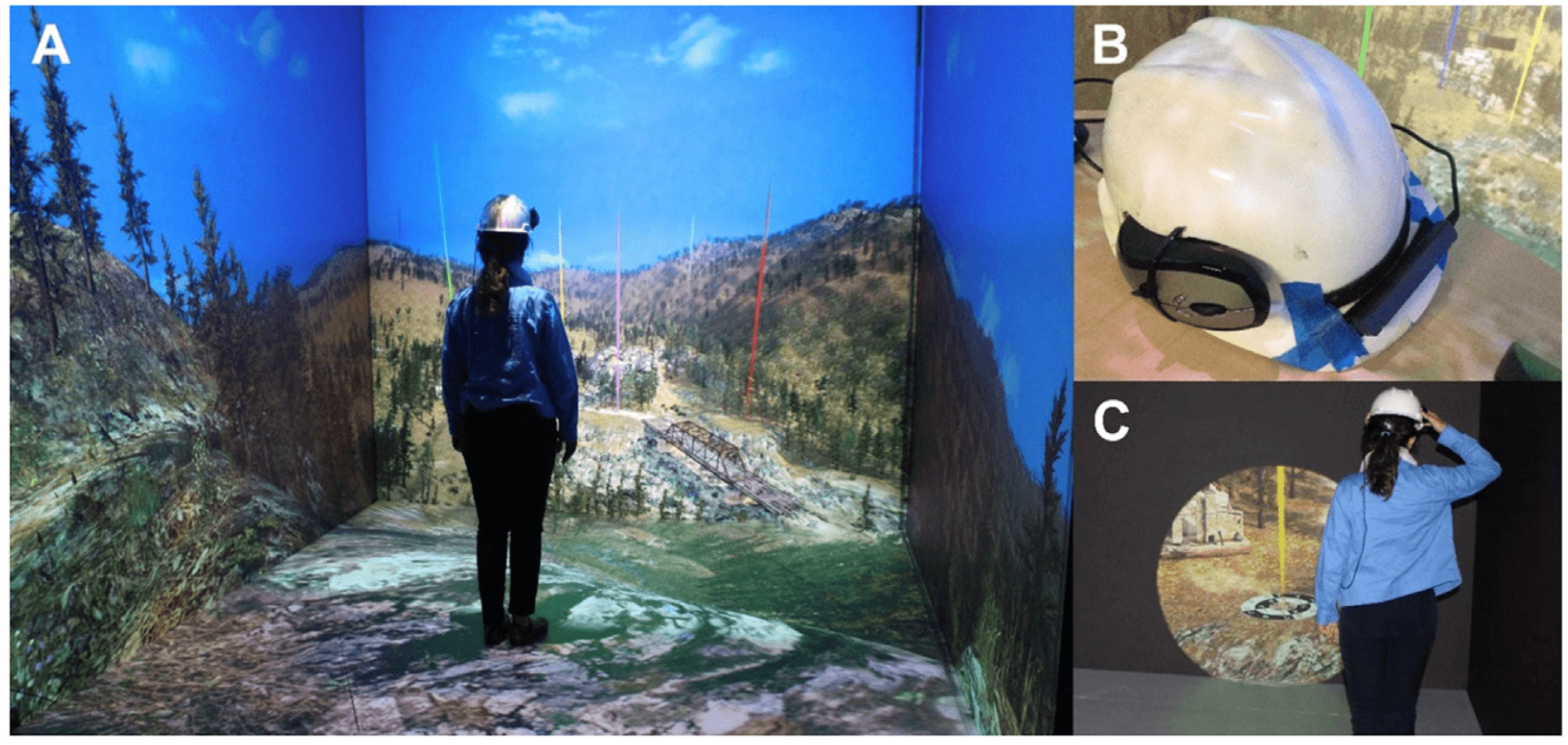
Built an AR simulation inside VR (CAVE system) to precisely control latency parameters that would be uncontrollable in actual AR hardware
Tested 7 conditions across 30 participants (12F, 18M), simulating optical see-through (OST) and video see-through (VST) AR at matched and unmatched latency levels:
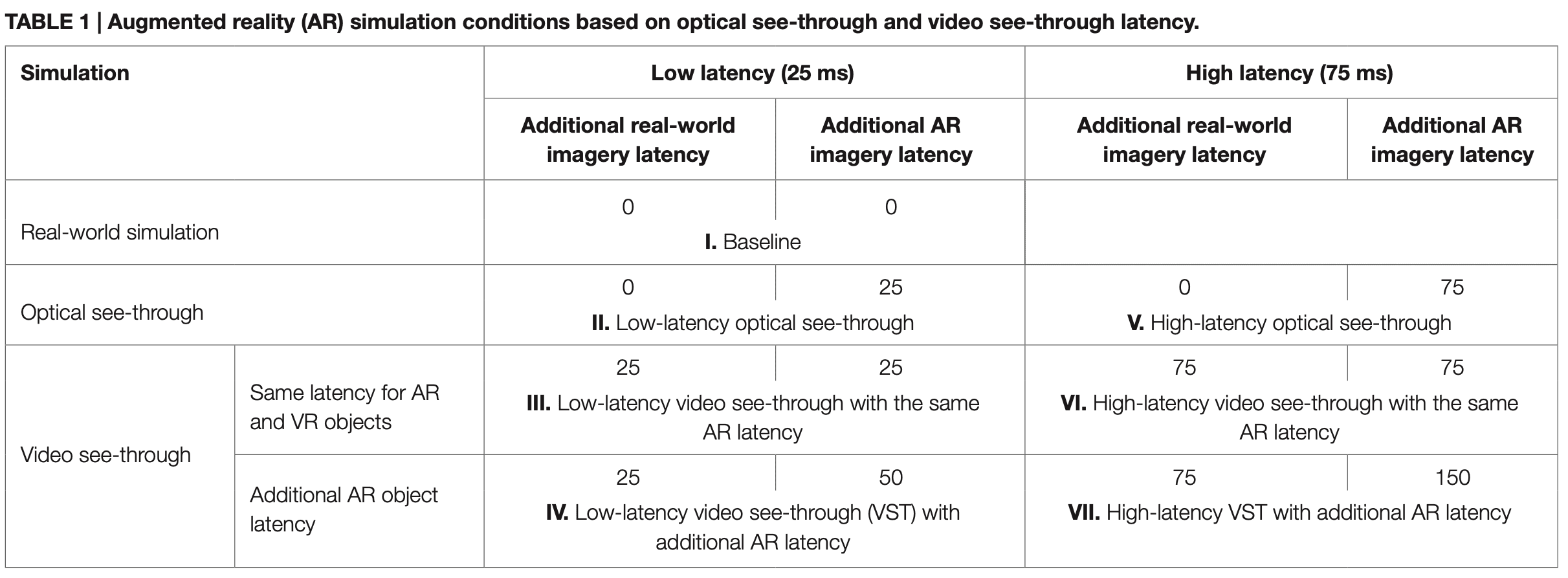
Condition | Real-world Latency | Virtual Latency | Registration |
|---|---|---|---|
Baseline | 0ms | 0ms | Perfect |
Low OST | 0ms | 25ms | Mismatched |
Low VST matched | 25ms | 25ms | Perfect |
Low VST unmatched | 25ms | 50ms | Mismatched |
High OST | 0ms | 75ms | Mismatched |
High VST matched | 75ms | 75ms | Perfect |
High VST unmatched | 75ms | 150ms | Mismatched |
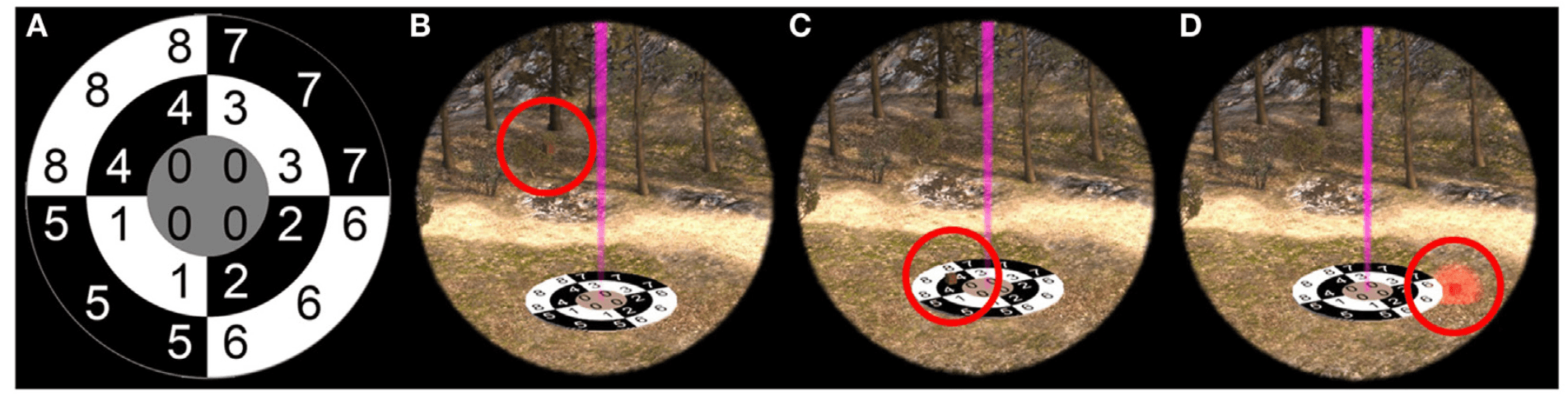
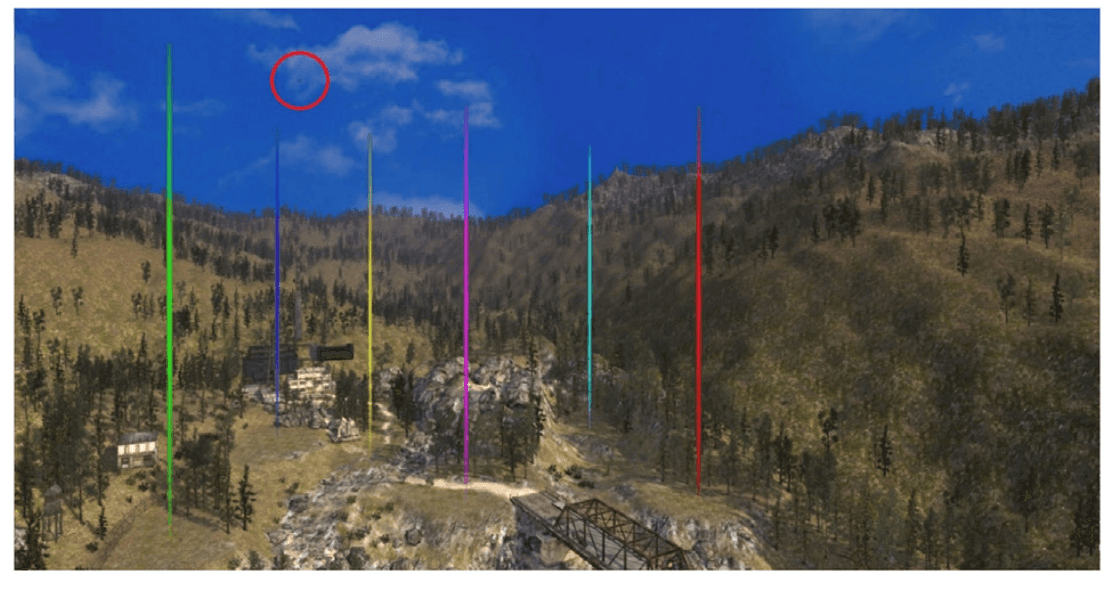
Task: military forward observer simulation — tracking aerial drops onto targets at 400–650 ft using both unaided view and 4× virtual binoculars
My Role
Lead researcher responsible for study design, AR simulation platform development, experiment execution, and analysis.
Key Findings
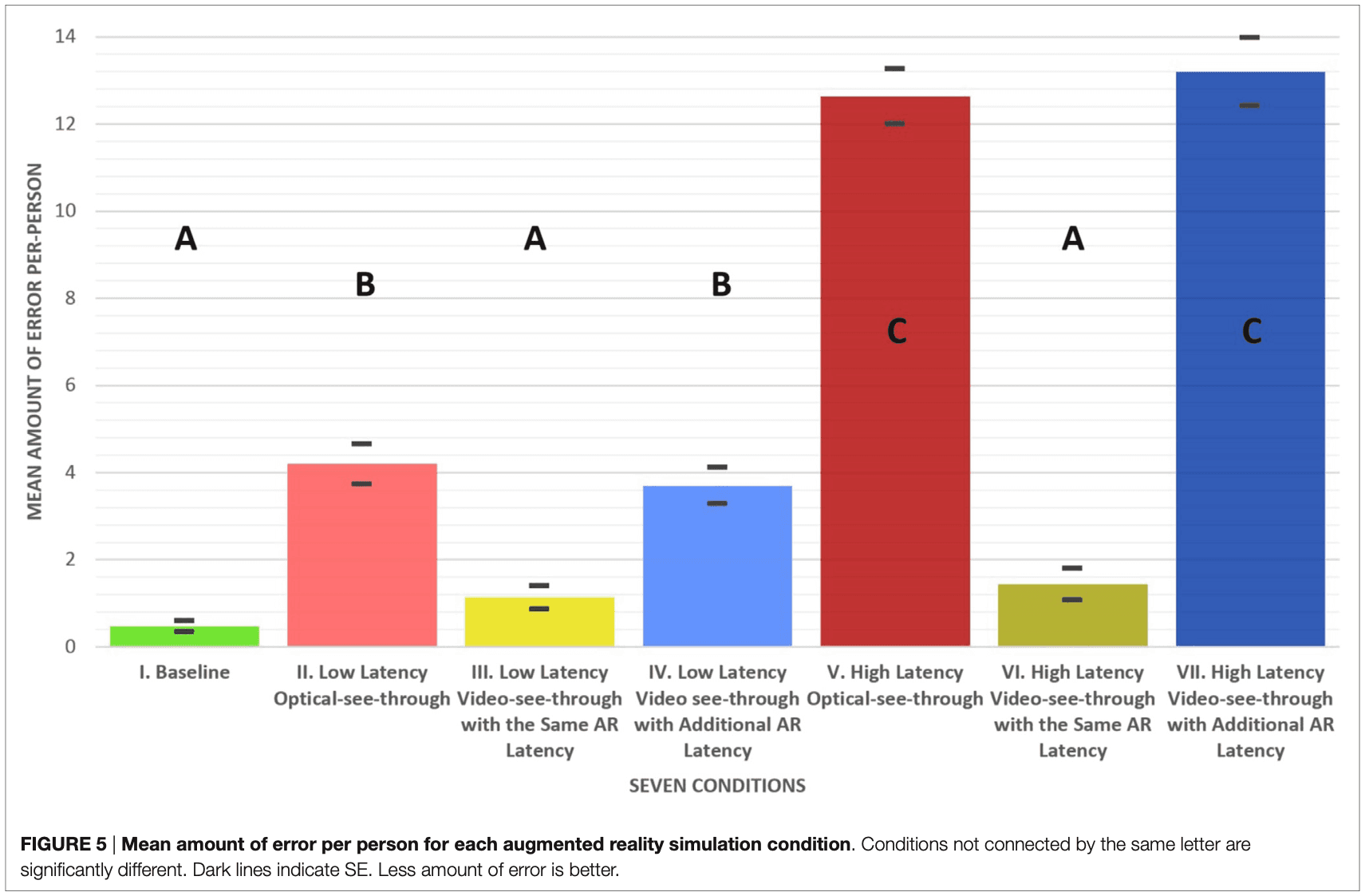
Matched latency conditions produced significantly better accuracy than unmatched ones (p<0.0001) — even when total latency was higher
High VST matched (75ms/75ms) outperformed low OST (0ms/25ms) — a higher-latency system with perfect registration beat a lower-latency system with misregistration
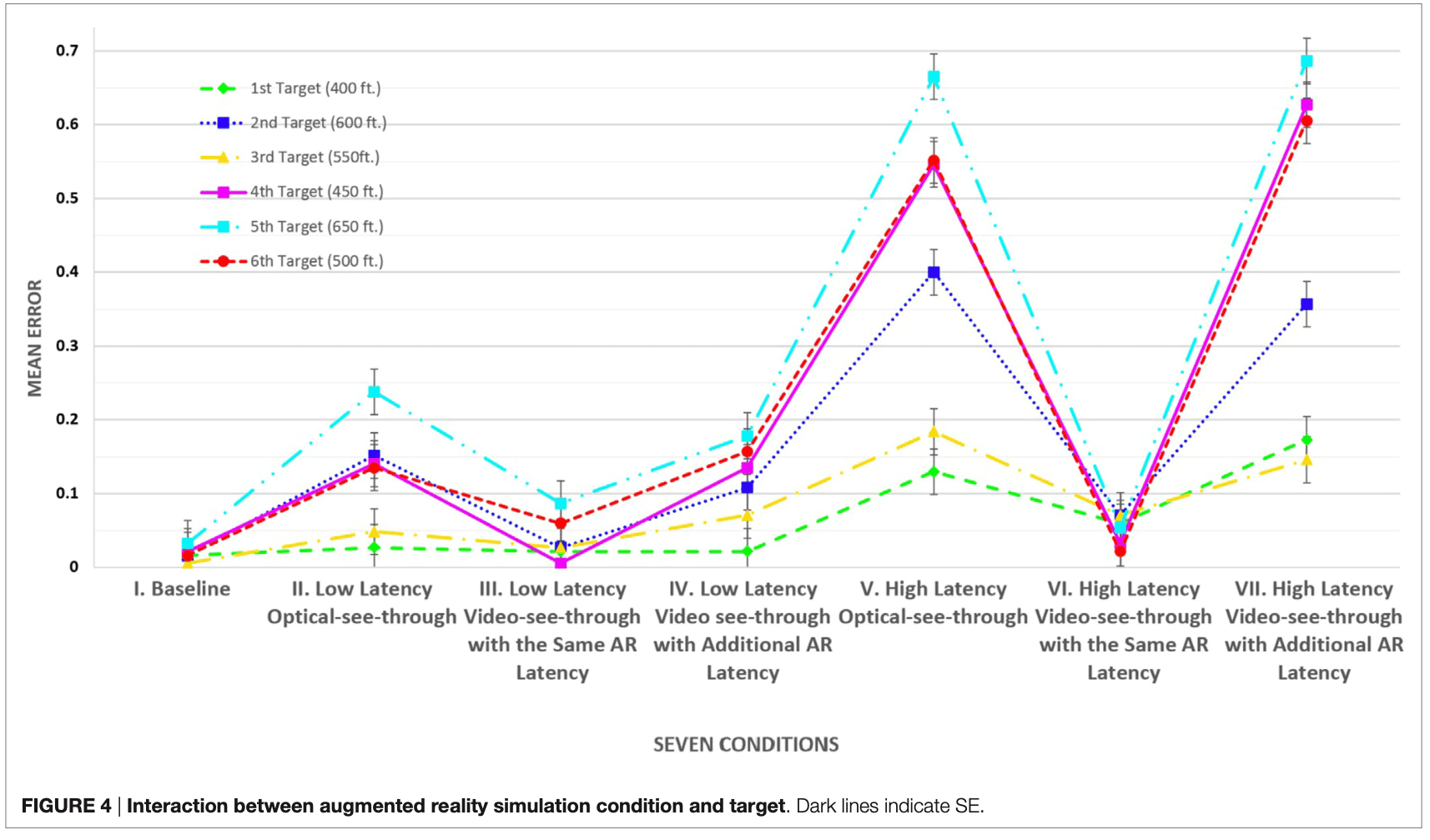
Misregistration error grew with later targets — users in unmatched conditions fell progressively behind, unable to recover
3 clearly separated accuracy groups emerged: perfect registration (error ~0.4–1.2), some misregistration (~3.5), significant misregistration (~10)
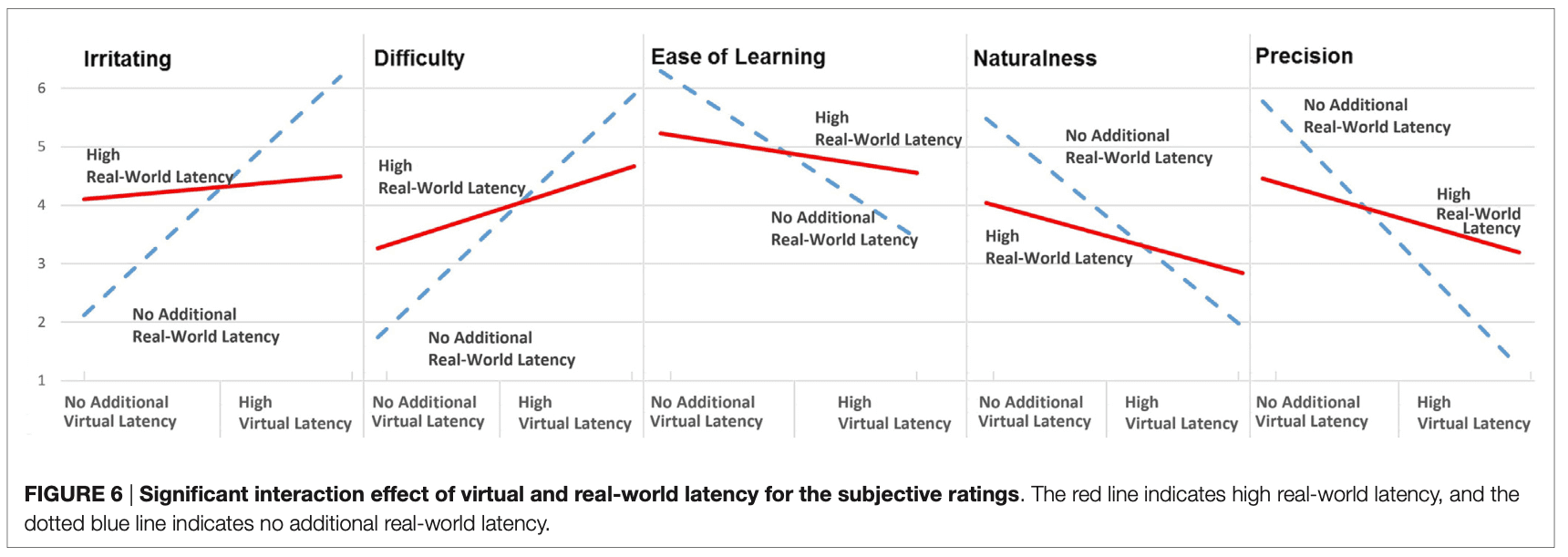
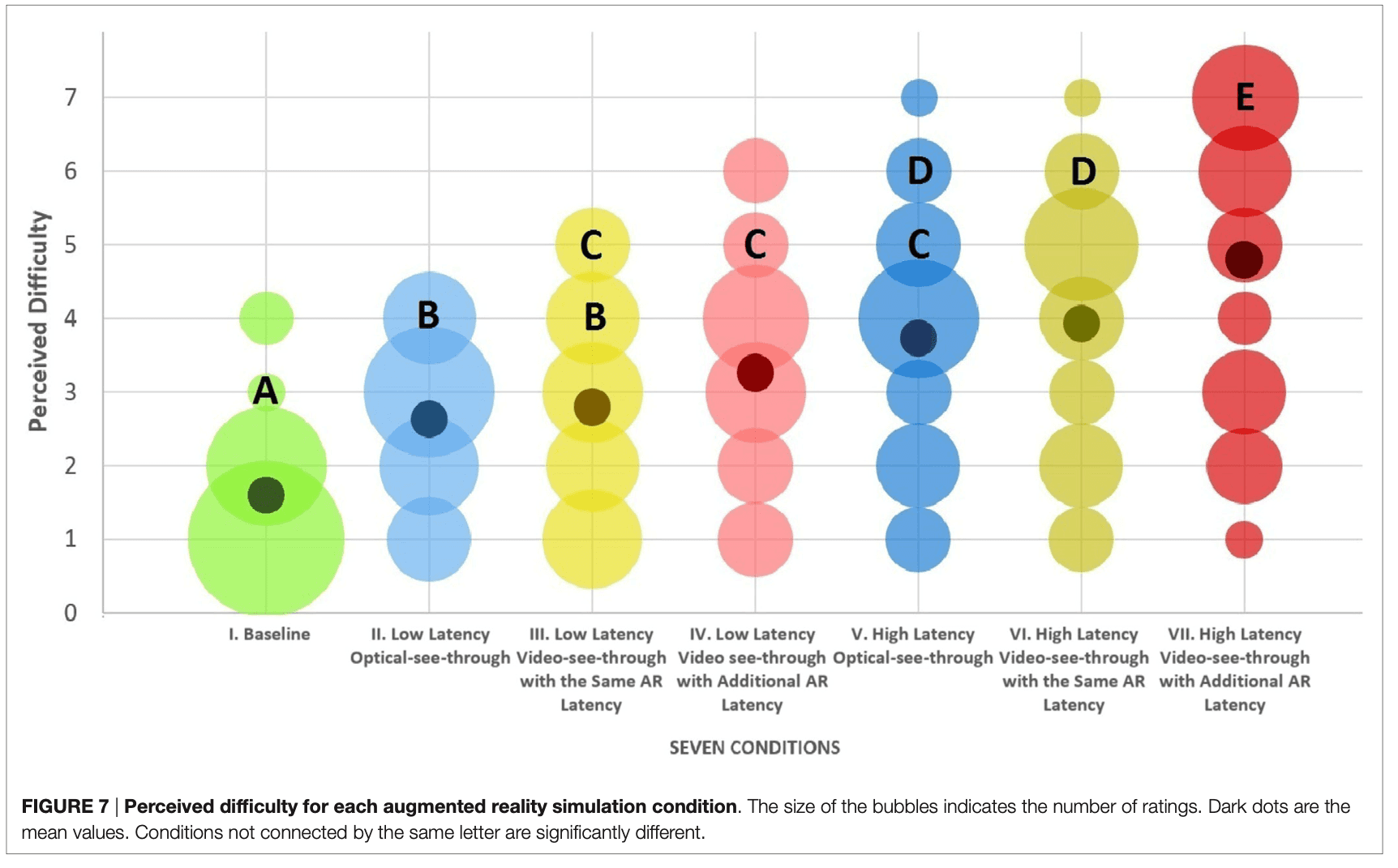
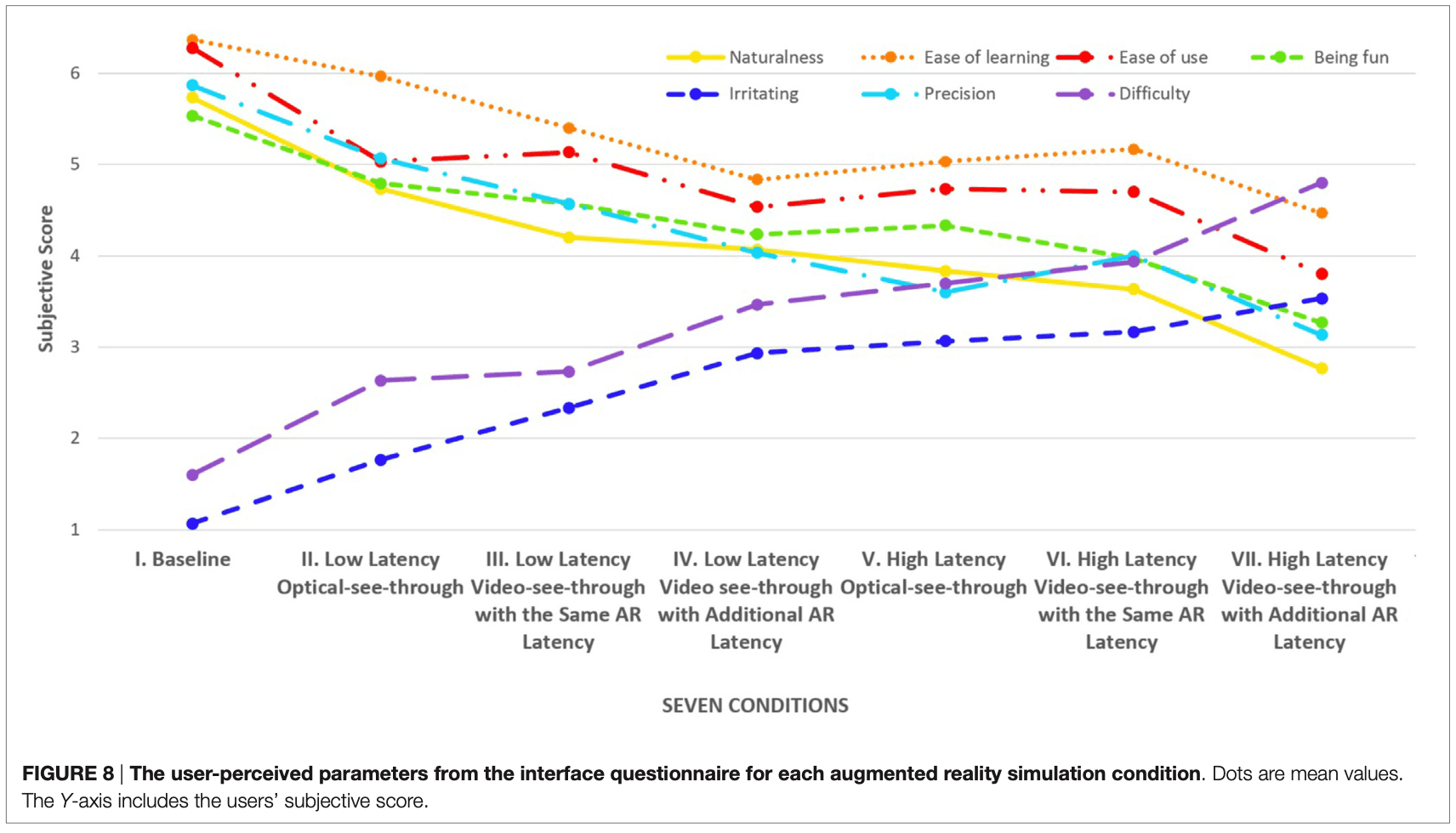
Subjective ratings showed significant interaction effects on difficulty, irritation, naturalness, and perceived precision (all p<0.05)
Key design implication: for registration-critical tasks, AR designers should consider deliberately adding real-world latency to match virtual latency rather than optimizing total latency alone