The Story
Research → Pivot → Product → Enterprise → Acquisition
Interia, is the AI/XR startup I founded after Apple. This is the story of Interia:
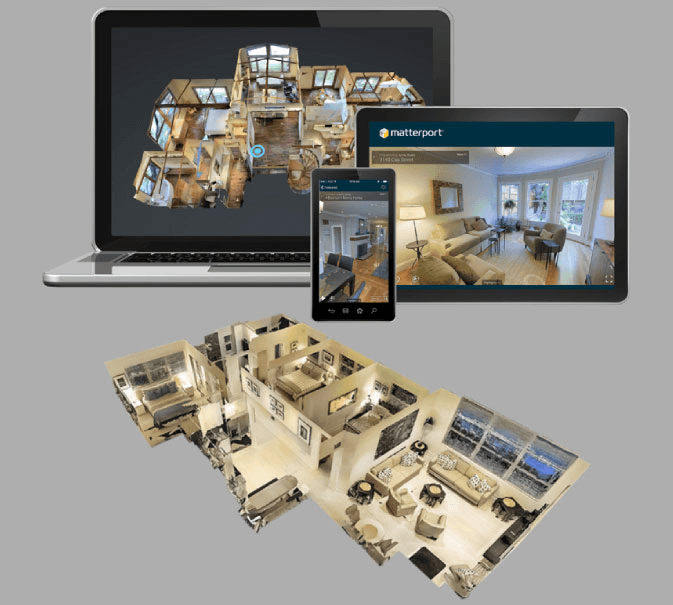
Interia is a tool to experience a property before it is build.
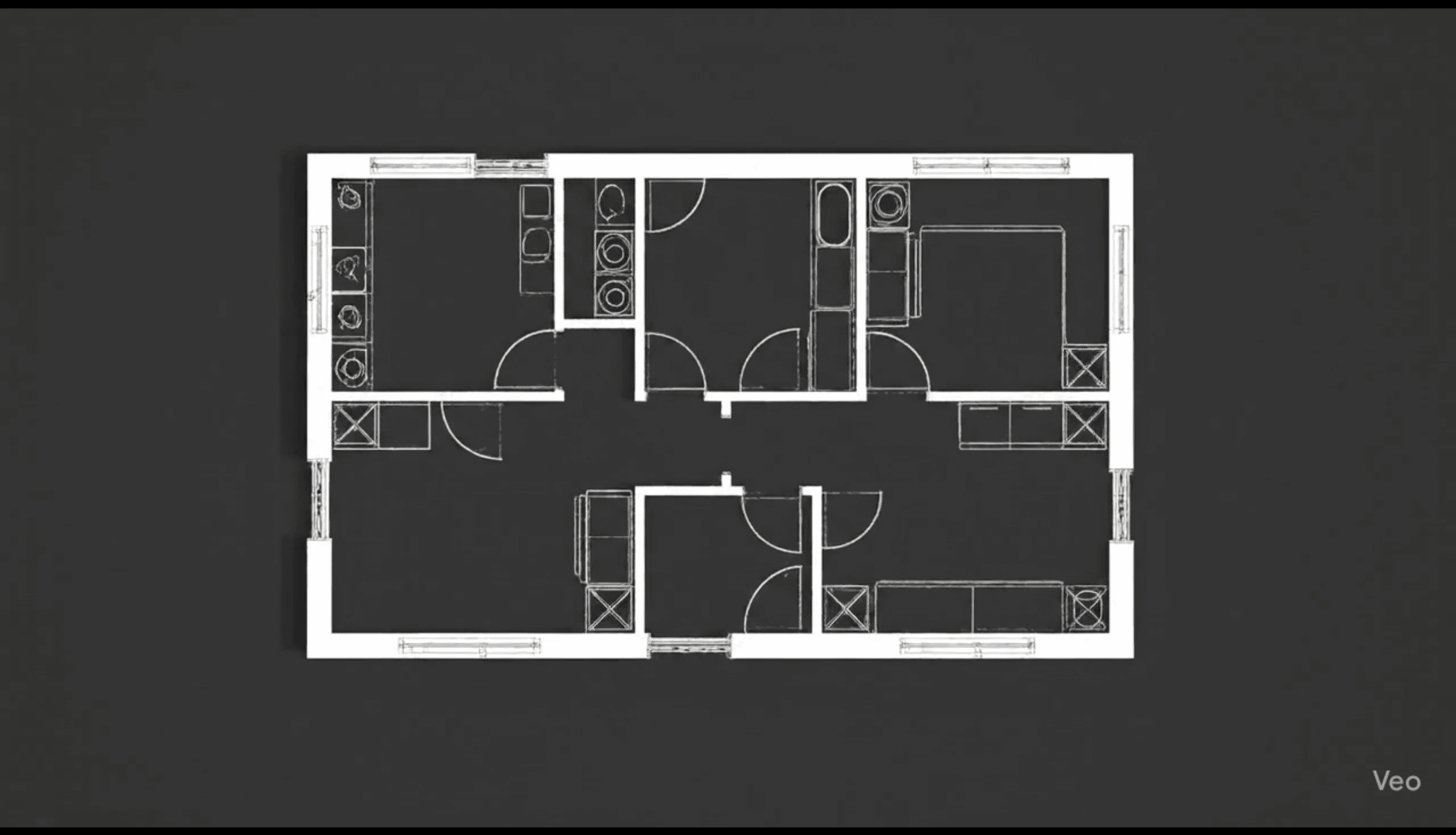
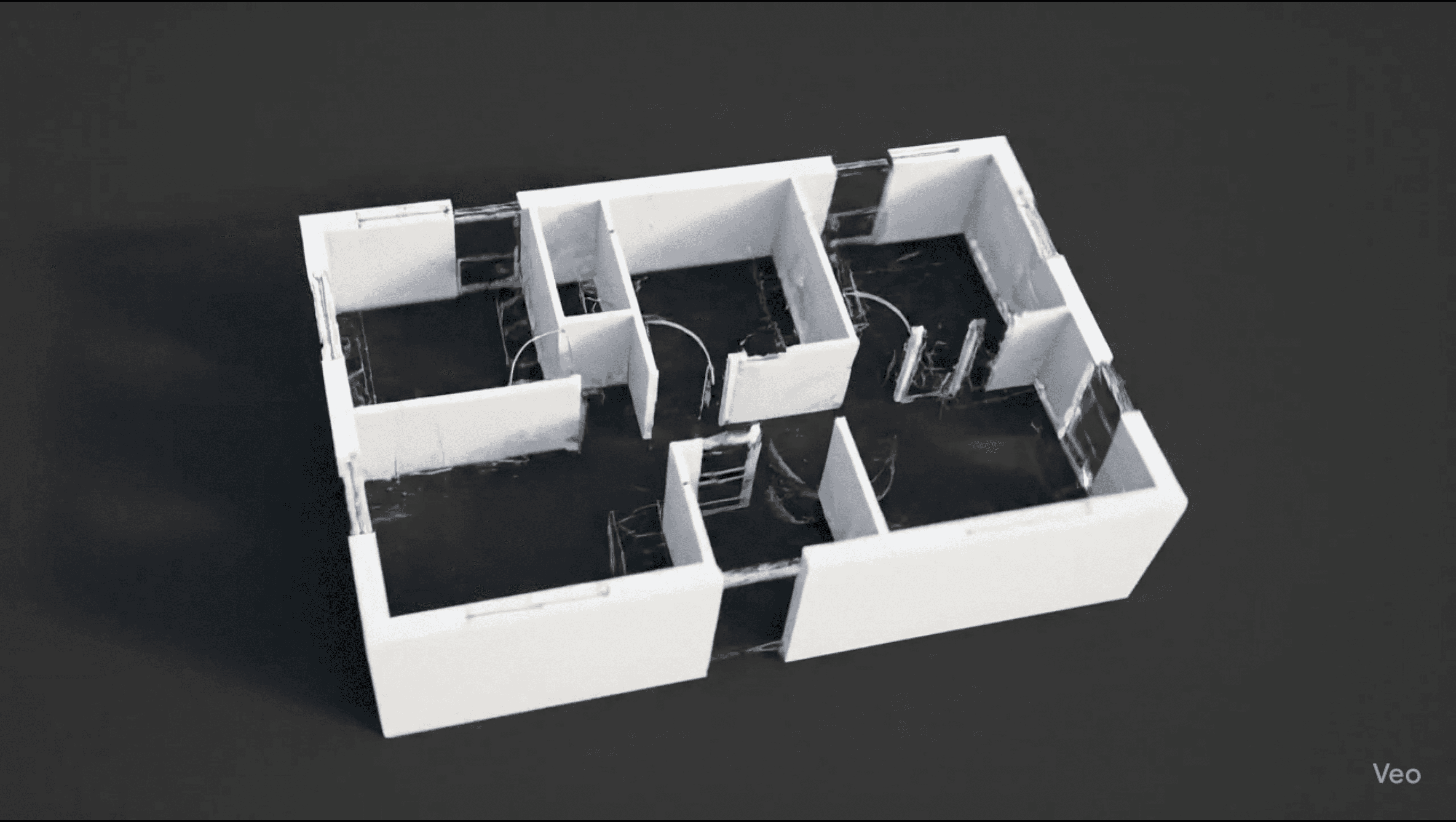
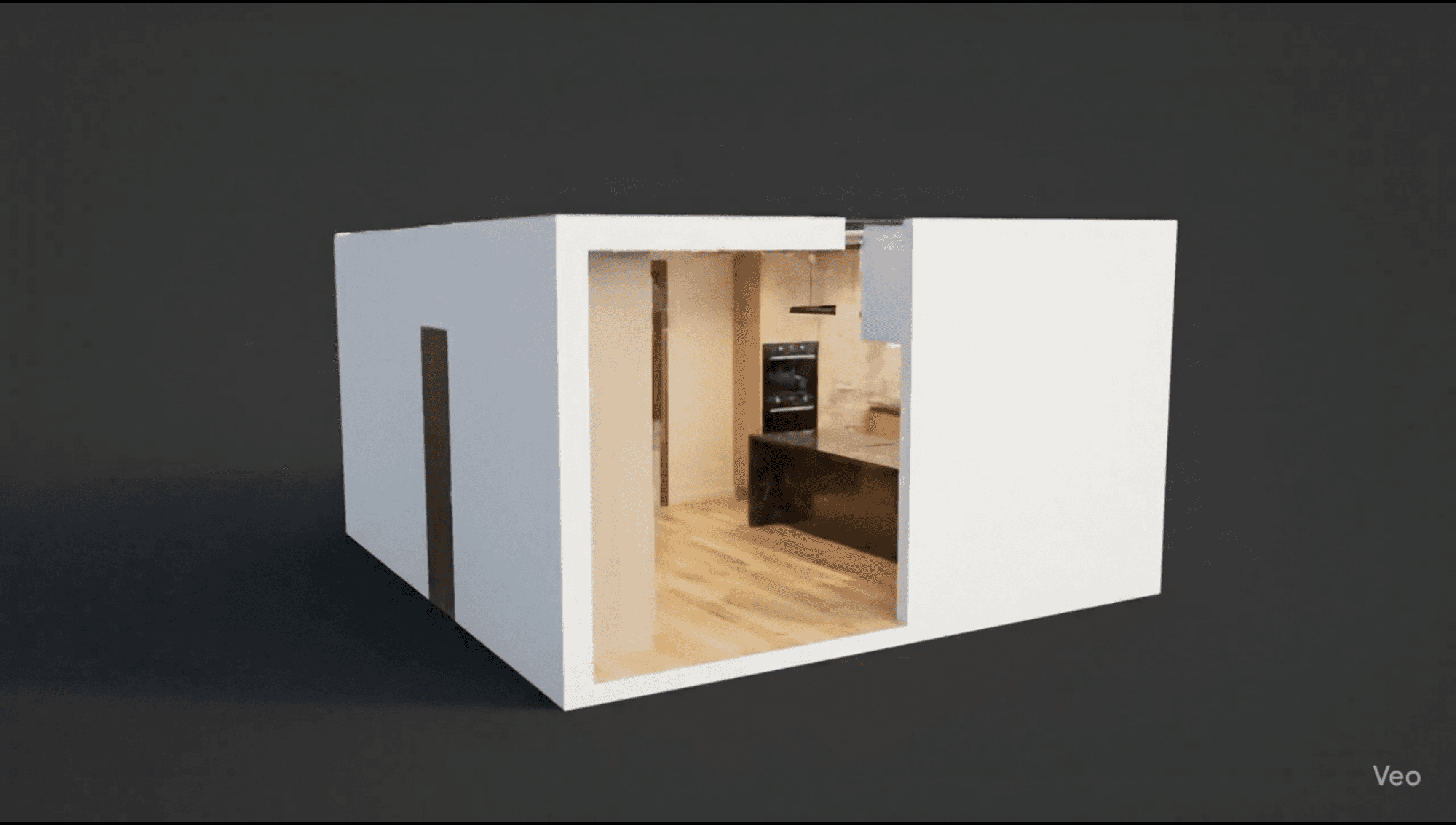
Interia uses AI to transform 2D architectural floor plan into an immersive 3D model of the property. It enables user to walk through and interact with properties before they are built. Users can walk around the unit, observe the real view in different times of the day and switch between the real materials for flooring, wall colors, kitchen countertop, cabinets and anything that the builder makes optional.
Interia was presented in COMEX 2025 in Oman and was acquired in 2026.
Stage | Goal | Method | Result |
Initial idea | Understand the problem space | Problem-space exploration, open-ended qualitative researchContextual inquiry | Validated the potential of AI and immersive technology in real estate |
U.S. market | Discover needs and barriers | Semi-structured interviews, prepared guide with flexible follow-up | Learned the U.S. market was relatively conservative |
Pivot decision | Identify a better opportunity | Market discovery research, competitive analysis, market surveys | Validated the Middle East as a stronger market opportunity |
Middle East market | Understand decision-making and pain points | Generative interviews, exploratory discussionsJourney Mapping | Identified stakeholder motivations, goals, and pain points |
Construction companies | Validate business needs and willingness to pay | Stakeholder interviews,Business Model Canvas workshop | Validated business requirements and willingness to pay |
Building the product | Improve workflows and prioritize features | Iterative usability testing, continuous customer feedback | Validated workflow improvements through customer feedback |
Commercialization | Validate product-market fit | Pilot deployments, enterprise feedback | Validated product-market fit |
Initial Idea
The initial idea was actually very different from the final product. I started by asking a simple question: Can we use AI and VR to help people make better home-buying decisions?
My first hypothesis was focused on the U.S. housing market. Instead of physically staging homes, I imagined keeping houses empty and letting buyers wear a VR headset. AI could learn their style preferences and instantly furnish and decorate the home virtually. Buyers could also walk through homes remotely without having to visit every property in person.
At that stage, my goal wasn't to validate the solution—it was to understand whether I was solving a real problem.
At that stage, the problem space was still ambiguous, so a survey would have forced me to assume I already knew the important questions. Interviews allowed unexpected problems to emerge. I didn't start with a survey because I didn't want to bias the participants and rather understand the needs, risks and opportunities.
U.S. Market
I started with exploratory qualitative research, conducting around 20 semi structured interviews with real estate agents and interior designers across the U.S. and Canada.
The interviews quickly revealed that the technology wasn't the biggest issue. The business model and operational realities were.
Agents raised concerns like:
Who would purchase and maintain the VR headsets?
Who would keep them charged, updated, and troubleshoot technical issues?
What if a customer fell while wearing a headset?
More importantly, many agents told me that home staging is already part of the selling culture in the U.S. Buyers generally prefer visiting homes in person, and sharing headsets also raised hygiene concerns. Also novel technology was not particularly interesting for neither buyers nor agents.
Even if the technology worked well, adoption would likely be difficult.
Pivot decision
At that point, instead of trying to force the idea to work, I treated those findings as evidence that my original market wasn't the right one.
So I went back into discovery.
One limitation was that my initial interviews were concentrated in the U.S. market, so before pivoting I intentionally expanded recruitment to avoid assuming those findings generalized globally.
I broadened my research and began interviewing people in other real estate markets. Through additional interviews with developers, real estate professionals, and buyers in the Middle East, I discovered a completely different workflow.
Large construction companies there sell apartments years before they're built. Buyers often have to commit based on architectural renderings and floor plans, while choosing expensive options like flooring, cabinetry, countertops, lighting, and finishes without ever experiencing the space.
Middle East market
This led to another round of generative interviews, this time directly with buyers. Instead of asking whether they wanted VR, I focused on understanding their biggest uncertainties before purchasing.
Several themes consistently emerged:
Buyers wanted to understand the actual view from the apartment.
They wanted to experience natural lighting at different times of the day.
They wanted to know what it would feel like to walk through the space.
They wanted confidence that their design selections would work together and with their own furniture before paying for expensive upgrades
Construction Companies
I also interviewed construction companies and learned something equally important from the business side. Luxury developers weren't only selling apartments, they were selling an experience. Differentiating themselves from competitors and creating a memorable sales process was a major business objective, and they were willing to invest in technology that supported that goal.
At that point, multiple sources of evidence were pointing in the same direction. We had validated both a genuine customer problem and a business model with customers willing to pay.
Building the product
That's when I decided to pivot the company. I assembled a multidisciplinary team of engineers, UX designers, AI developers, 3D artists, and sales specialists to build the platform around the needs we had uncovered through research rather than around the original idea.
As we developed the product, we continued running iterative usability studies and customer feedback sessions with enterprise partners to refine workflows and prioritize features.
Commercialization
Eventually, I traveled to Dubai and later exhibited at COMEX in Muscat, Oman, where we demonstrated the platform to developers across the region. Those efforts led to our first enterprise customer in Dubai and ultimately to the acquisition of Interia by a construction company in Dubai, UAE.
That experience reinforced one of my biggest beliefs as a researcher: the goal isn't to validate your idea. It is to discover where the real opportunity is. In this case, research didn't just improve the product. It fundamentally changed the market we pursued, the customers we served, and ultimately the success of the company.
What We Built
Device-agnostic XR platform (VR + Web)
Real-time immersive walkthroughs
Interaction system for:
layout
materials
lighting
Intuitive navigation and interaction systems
AI-assisted content generation
My Role
Founder & CEO
Defined product vision, strategy and market research
Led a multidisciplinary team of 10+ engineers, designers, and 3D artists
Directed UX, system architecture, and implementation
Conducted user research and product validation
Led partnerships and stakeholder engagement
Reflection
Interia reinforced that immersive technology only succeeds when it solves a real problem. By focusing on usability, realism, and accessibility, we turned XR from a novelty into a practical decision-making tool.