

Goal
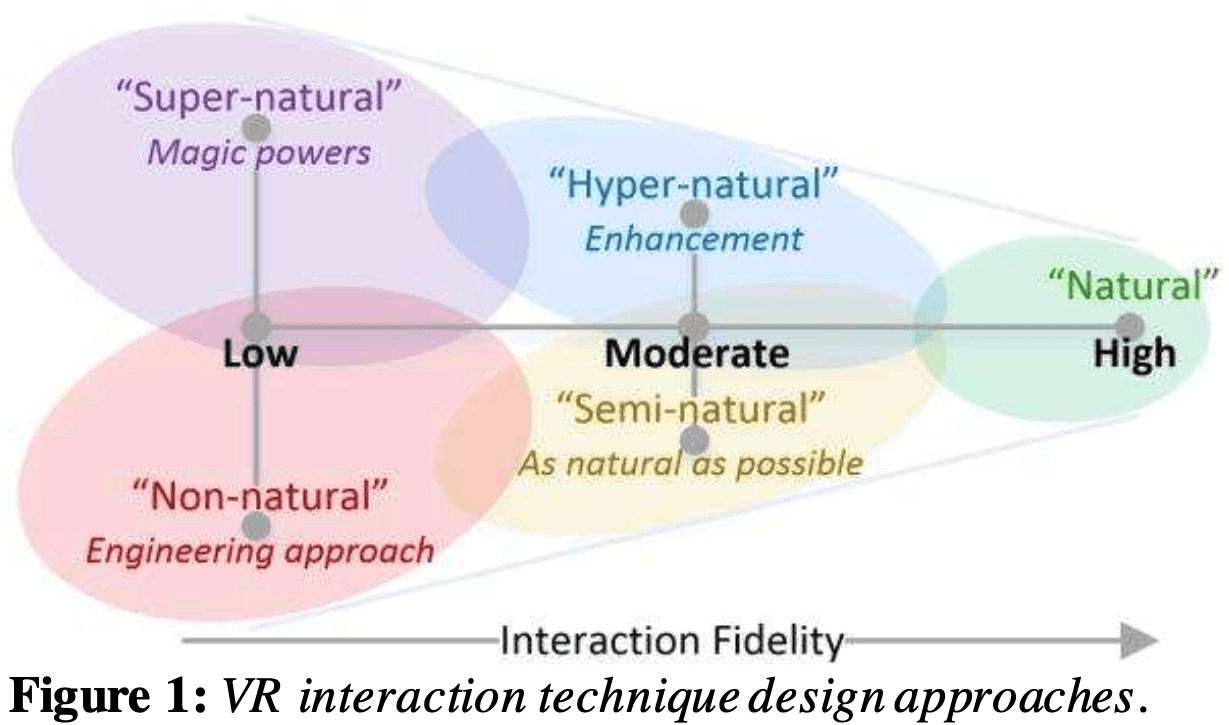
Challenge the assumption that more realistic = better in VR by empirically comparing locomotion interfaces across the fidelity spectrum.
Challenge
Dozens of VR locomotion devices aim to simulate natural walking — but no one had clearly tested whether medium-fidelity ("almost natural") interfaces actually perform better than simple, low-fidelity ones.
Approach
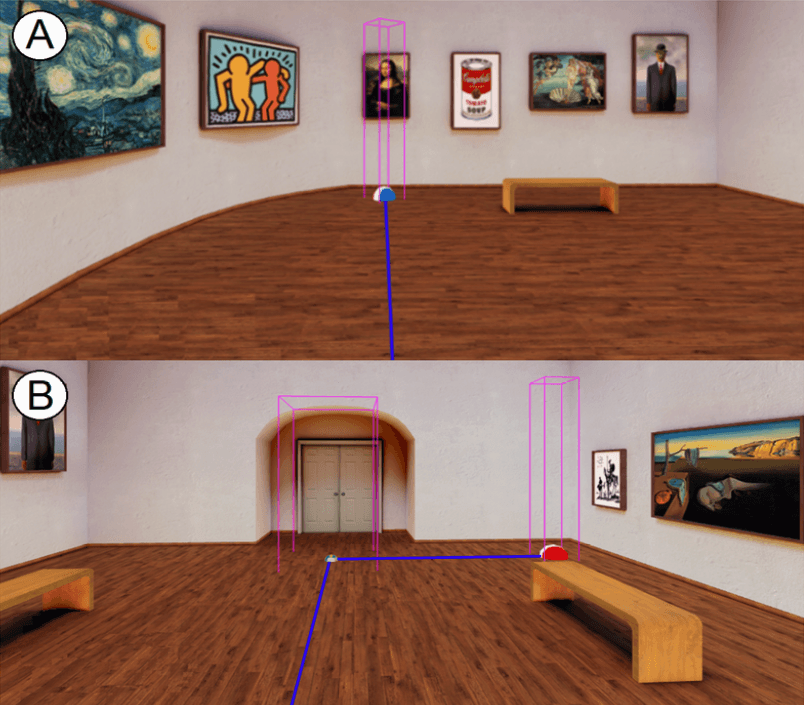
Controlled user study with 12 participants comparing 3 interfaces on speed & path accuracy tasks in a VR art gallery:
Interface | Fidelity Level |
|---|---|
Gamepad | Low |
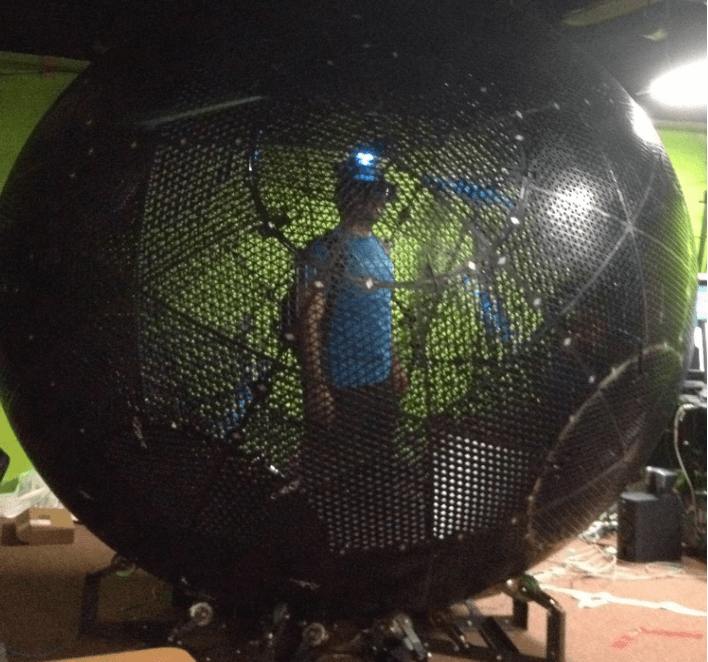
Virtusphere (walk-in-sphere) | Medium |
Real Walking (tracked) | High |
My Role
Co-researcher contributing to experiment design, fidelity analysis, and data interpretation.
Key Findings
Virtusphere was ~2.5× less accurate than both gamepad and real walking (p<0.0001)
Virtusphere was significantly slower on both straight-line and multi-segment tasks (p<0.0001)
Even gamepad novices (< 1hr/week gaming) completed tasks 2.5× faster on gamepad than Virtusphere
Virtusphere rated significantly more fatiguing and harder to learn than both alternatives
Real walking and gamepad showed no significant difference in speed or accuracy
Takeaway
More realism ≠ better UX. Medium-fidelity interfaces create a dangerous mismatch: they look natural enough that users apply real-world instincts, but behave differently enough to cause failures. A well-designed low-fidelity interface can match the performance of full natural interaction.