Locomotion Fidelity Study — Does More Realistic = Better?
Goal
Compare how natural, semi-natural, and non-natural VR locomotion affect user performance and usability.
Challenge
VR designers often assume “more natural = better,” but this study questioned whether semi-natural walking interfaces actually improve UX.
Approach
Ran a within-subjects user study with:
12 participants
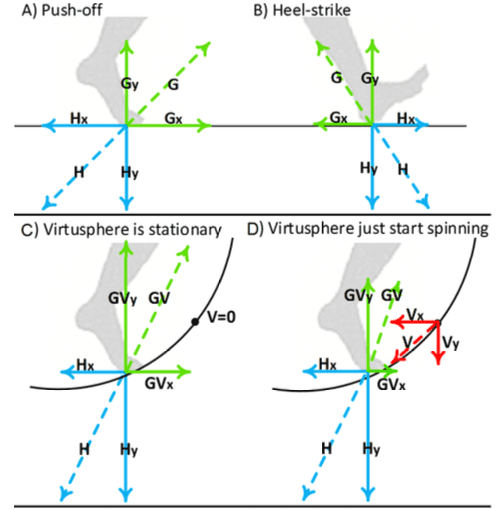
3 locomotion methods: real walking, Virtusphere, gamepad
48 targets per interface
Measures: completion time, path deviation, fatigue, ease of learning, naturalness, precision
My Role
I served as the Principal Investigator for this project, leading the study from concept to analysis. My work included experimental design, VR system setup, participant study execution, quantitative data analysis, and interaction fidelity evaluation.
Key Findings
Virtusphere was significantly slower and less accurate than both gamepad and real walking.
Even low-gamepad-experience users completed tasks ~60% faster with gamepad than Virtusphere: 105.3s vs. 262.0s.
Their path deviation was ~77% lower with gamepad: 19.1 ft vs. 82.0 ft.
Gamepad and real walking were both rated easier to learn than Virtusphere.
Virtusphere felt more natural than gamepad, but caused more fatigue and worse control.
Reflection
The study showed that natural-looking interaction is not always better UX. A simple, well-designed low-fidelity control can outperform a semi-natural interface if it is easier to learn, more predictable, and less physically demanding.